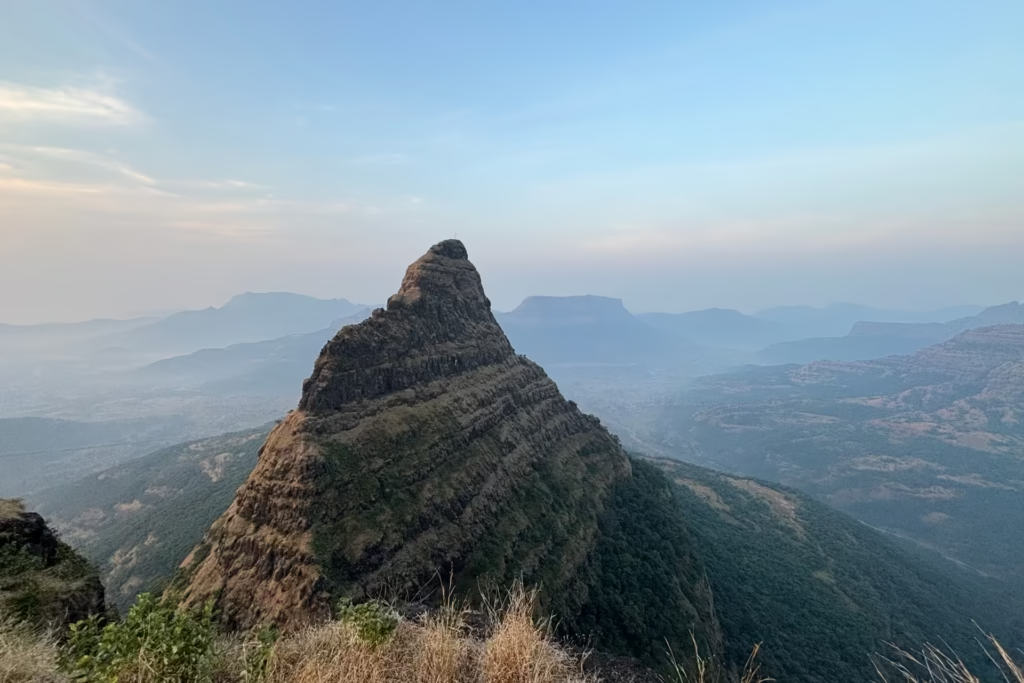
I finally did the Lingana fort trek last weekend on 23 Nov 2025. Lingana was not on my list at all. I just saw a post on Instagram and enrolled. I wanted to check my endurance level, so I picked one of the toughest treks in Maharashtra.
Lingana is steep, raw, and a little crazy in the best way. The climb, the exposure, the long rappels, they all hit different.
I came back tired, dusty, in torn clothes, with multiple bruises, and absolutely thrilled. So in this short blog, I will tell you how it went and what you should know before you try it yourself.
My Experience in Brief
How the day started
I started the journey on 22 November, Saturday. My pickup point was Swargate. The traveler bus picked me up at around 11.11 pm. We reached the base village at around 3.45 am.
The distance from Pune to Mohari is only around 75 km. But the route goes through multiple ghat roads, so it takes time. The last stretch is the worst. The road has a deep valley on both sides and we had to drive right on the ridge.
Once we reached Mohari, the organizer team collected the technical equipment and gathered us for instructions.
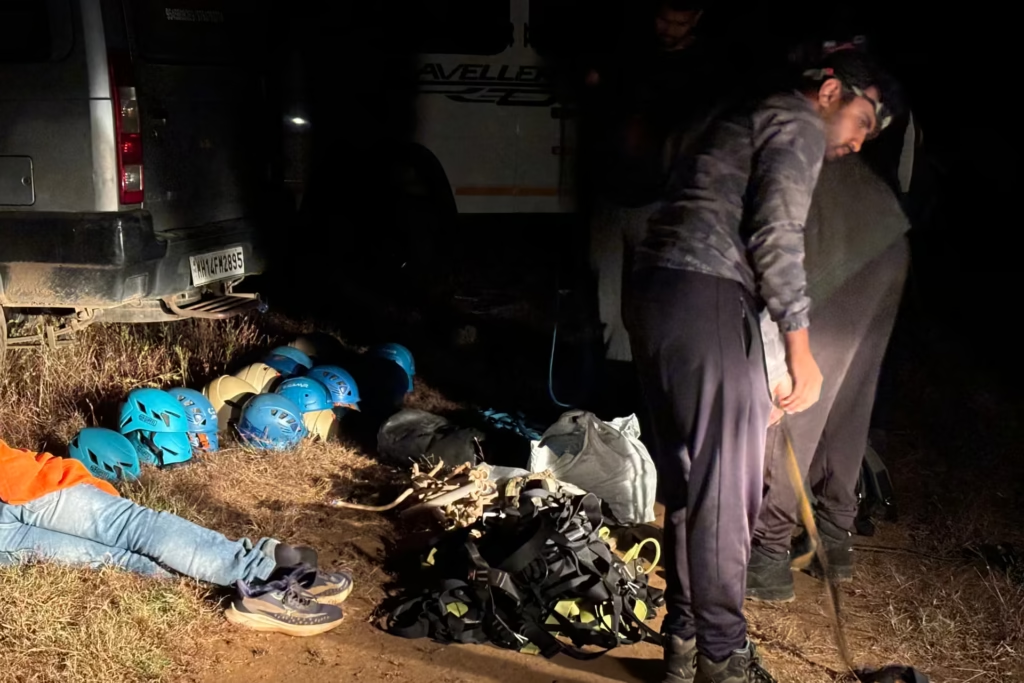
The approach to the Railing Plateau
The trek timing was set for 5 am, so there was no time to rest. We collected our helmets, rappelling gloves, harness, and carabiners. Then we started walking toward the Railing Plateau.
The route from Mohari to the plateau passes through dense jungle. It was a silent, dark night. We walked through the forest with torches in our hands. Surprisingly, there were no insects. The night sky looked amazing. The stars were bright and everywhere.

We reached the Railing Plateau at around 5.30 am. The view was beautiful. We saw the sunrise from the plateau. Lingana looked massive and majestic in the morning light. We ate poha for breakfast, freshened up, and got ready for the valley crossing.
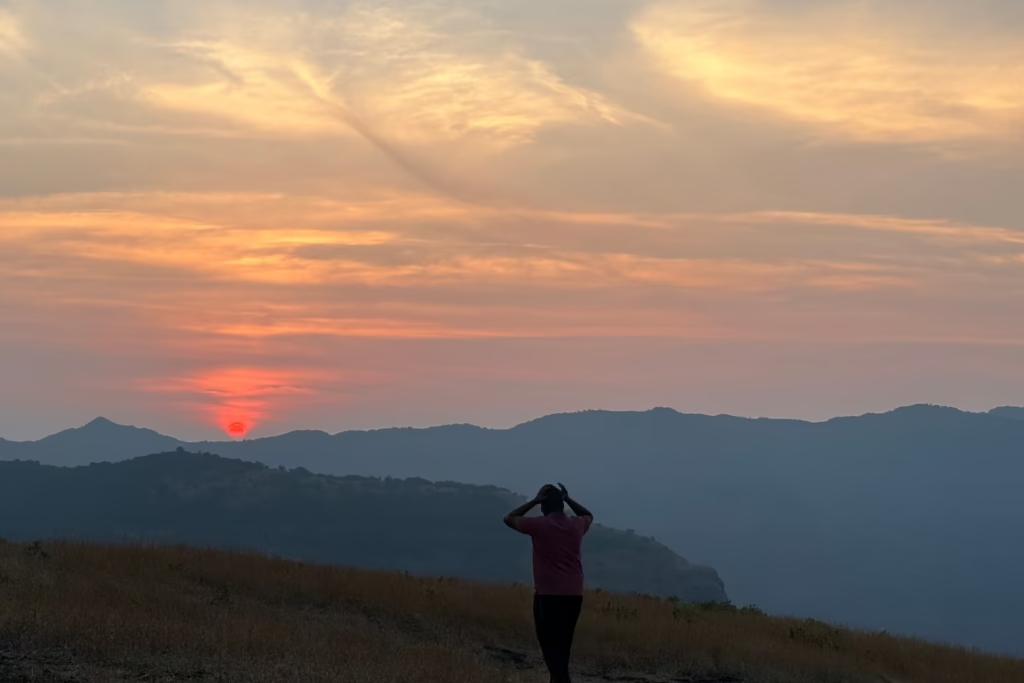
The expedition was divided into four parts
- Valley crossing. Around 800 feet. From Railing Plateau to Lingana Cave.
- Climbing Lingana from the cave to the summit.
- Rappelling down to the base of Lingana.
- Trekking up through Boratyachi Nal.
Maharashtra’s Longest Valley Crossing around 800ft.
When my turn came for the valley crossing, I felt confident. This was my first zipline experience. I started smoothly. The organizers stopped me at the middle of the rope so I could enjoy the view and feel the height. The wind was strong and cold.
I reached the cave safely. Took some photos. I deserved those. I left my extra baggage in the cave and only carried water, first aid, and some snacks. Then I hooked my carabiner to the safety rope and started the climb.
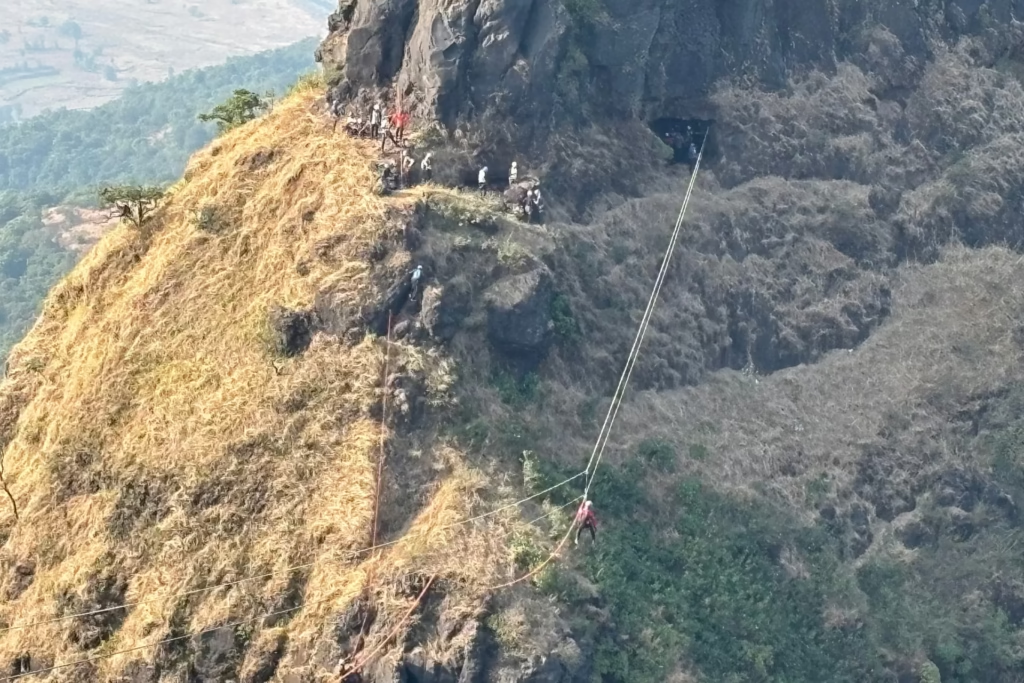
The climb
The climb was tough. Really tough. I weigh 90 kg. With the gear, clothes, shoes, and sack, my total weight must have gone up to around 95 kg.
There are around 10 to 12 difficult sections before the summit. The first one tested me. The second one almost broke me. A huge 10-foot boulder stood in the way and I had to climb it alone. No one can push you here.
I tried hard but I could not pull myself up. I almost gave up. I had barely started. Climbers behind me were passing me. I took a moment. I gathered myself. I knew it was all in the mind. I looked at the boulder again, placed my hand on the edge, and pulled with every bit of strength I had.
And I climbed it.
Can I tell you something? I felt proud of myself right there. I felt more joy on this boulder than even at the summit. This moment changed the entire trek for me.
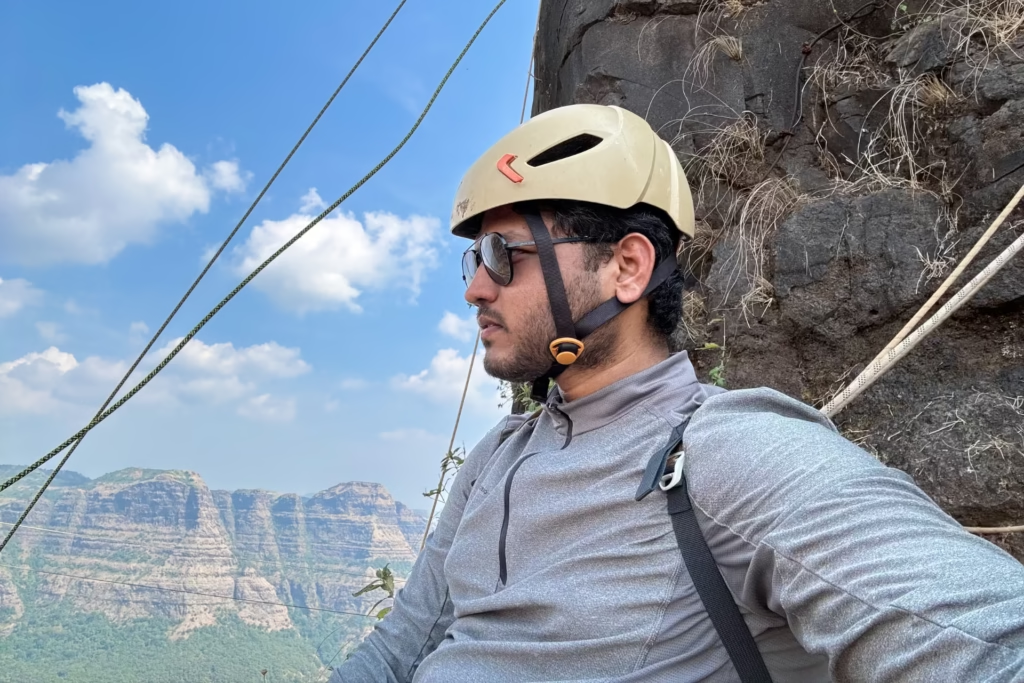
I continued climbing, one step at a time. Slowly. Carefully. I kept sipping water and eating dry fruits, chips, and chikki.
By around 3 pm, the final summit climb was still left. Many people had already started descending. I pushed myself and climbed up. I reached the peak at around 3.30 pm.
I had completed the Lingana climb. Hurray.
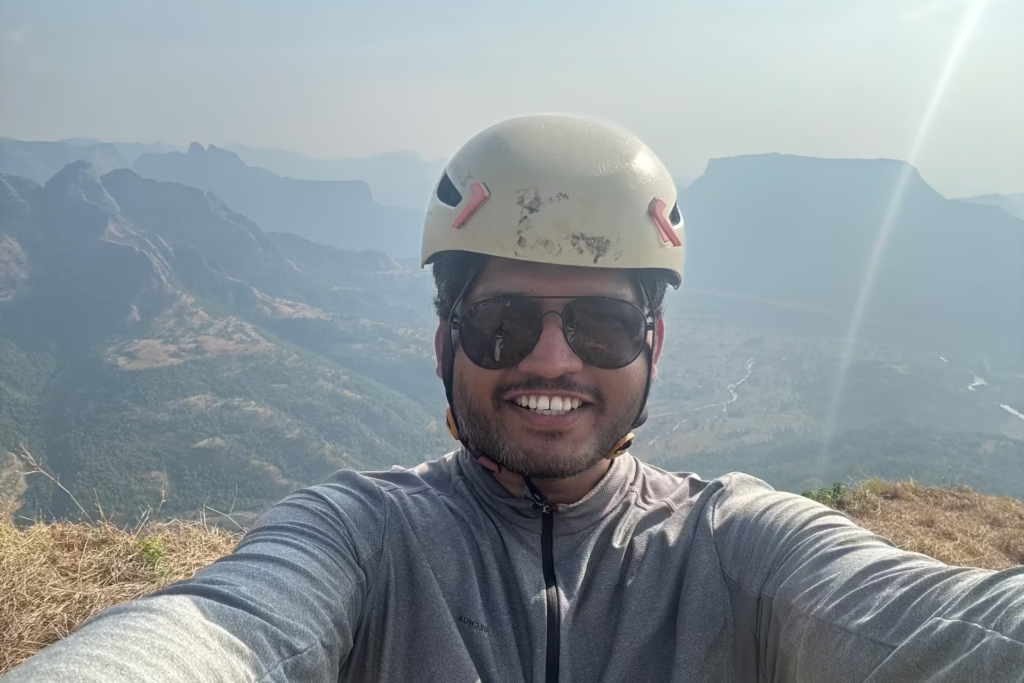
The experience was unreal. The 360-degree view blew my mind. I saw Raigad clearly. I could also spot Torna, Rajgad, Kokandiva, and other famous peaks. I saved the view in my memory. I stood there and absorbed the joy and the feeling of achievement.
The Rappelling Descent
Now the third stage had begun. We had to rappel down safely. And as it always happens with Punekars, we got stuck in traffic. Yes, on the top of Lingana. We were waiting for the path to clear so that we could start the descent.
And we waited. For an hour. Then two hours. We were moving like a turtle. It started getting dark. Sunset was done. The entire valley was slowly getting covered in fog.
We had climbed down only 10 to 20 percent. It was getting darker by the minute. The organizers decided to set the rappelling ropes. They set longer ropes than usual so we could move faster. And the thrill began.
Let me take a breath. It was brutal. It was dangerous.
I started rappelling down. My shoe got stuck between two boulders. I was hanging on the ridge, tied to the rope, with one leg jammed in a crack. I somehow managed to free my leg and continue. I reached the cave safely.
At this point, I had only half a bottle of water left. It was pitch dark. The organizers put me on another rappel rope. I hooked a small torch to my helmet and started rappelling down from the cave.
This was not the regular path. They opened a temporary route so we could get down quickly. It was difficult, risky, and completely offbeat. I started slow, but the overhang and the huge boulders pushed me out. Halfway through, I just rolled straight down into the valley. The rope slipped fast through my hands. It felt like I was falling without support. Just before the end, the rope locked and I stopped only 4 or 5 feet above the ground.
It was a deadly experience. Literally.
I crossed this section too. But I had no courage left to stand. I was not scared. I was exhausted. I just wanted to get down now. Without rappelling, if possible. I started sliding down slowly on the path. I held the torch in my hand. When I needed both hands for the rope or a boulder, I held the torch in my mouth.
That torch was the best investment I made for this trek. A high beam torch with extra batteries is a must carry.
Then the last rappelling section appeared. I did not want to rappel anymore. But I had no option. I hooked my carabiner and rappelled down slowly. I was very careful this time. And finally, I reached the base of Lingana. Exhausted. Thrilled. Blank. The third stage was complete.
Because of the pitch dark, the late night, the exhaustion, the tired team, and the new path, my rappelling experience was brutal. Close to death. Dangerous. I am getting goosebumps even while writing this.
Trekking up through Boratyachi Nal
At this stage, many trekkers had already started the Boratyachi Nal climb. This route passes through a narrow valley filled with big boulders and slippery rocky patches. There is no support. No ropes. No one to pull you up. You are on your own.
The team leader divided us into batches of twenty. They took a quick head count and we started moving. Almost everyone was frustrated at this point. Many people were abusing the friend who dragged them into this trek. Many regretted their decision to come. Everyone just wanted to reach home safely.
Almost no one had water left. The patch felt huge. It felt like an entirely separate trek. I had no energy to continue. My elbows were bruised. My knees were bruised. My pant was torn. My water bottle was almost empty.
I gathered my courage. I decided to climb one boulder at a time. I moved from two support points to three. At some sections, I climbed on all four. Slowly, I reached the hooked chain area. There was a big boulder there, and the chain helped us pull ourselves up. I climbed it, took a breath, and continued.
I moved slow. One small step at a time. I did not look up. I kept my focus on the next move. When I finally reached the upper section, I saw the torchlight of the trekkers who had climbed before me. They were resting. I joined them and took a long breath.
Now only the jungle patch remained. Around two kilometers. The path went slightly uphill. My water was completely over. I felt dehydrated. I thought I would faint. I asked other trekkers if they had at least one sip of water. But everyone was in the same condition.
Luckily, one team leader had filled his bottle at the water cistern near the cave. I mixed ORS in that water. Around three to four of us took sips one by one. Then we continued walking.
It felt like we were lost in the jungle. We kept looking for markings on the trees and rocks. After some time, we saw a tower light. Then we heard voices of people from the village. That moment felt like pure relief.
We finally reached the village. The trek was complete.
I freshened up and drank almost an entire bottle of water in one go. I felt alive again. Then I ate my dinner. Nachni bhakri, batata-watana bhaji, rice, and dal. I changed my clothes and got into the bus.
It was around 1.30 am when we started the return journey. We reached Swargate at around 3.30 am. I took a cab and reached home safely.
What Makes Lingana fort trek Different
Lingana is nothing like a normal Sahyadri trek. It’s one of the most dangerous treks in Maharashtra. It is a full vertical climb with no margin for error. You need ropes, a harness, and an experienced technical team at every stage. The exposure stays high throughout and the adrenaline rush never stops. Every step tests your focus, strength, and mindset.
Things You Must Know Before Going for Lingana fort trek
- Difficulty level: Extremely tough and fully technical.
- Time required: Full day, often 14 to 18 hours.
- Base village: Mohari, near Raigad.
- Guide is mandatory: Do not attempt without a certified technical team.
- Best season: November to February.
- Required fitness: Strong stamina, good upper-body strength, and basic climbing comfort.
- Safety precautions: Carry a high-beam torch, stay hydrated, follow instructions, and never rush on exposed sections.
Gear and Preparation (Short List)
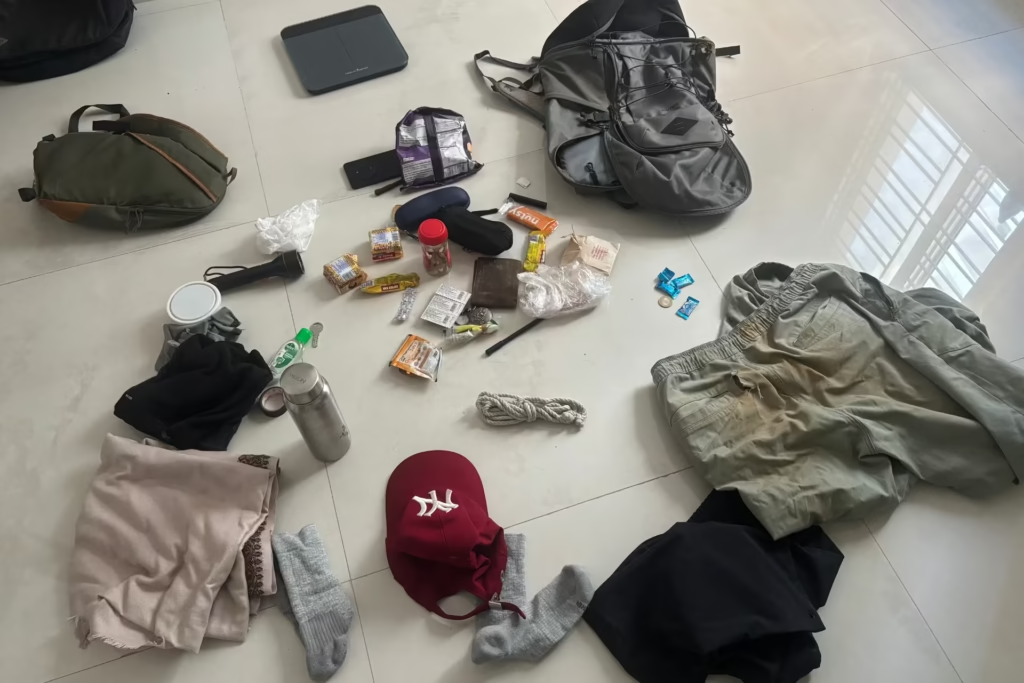
Personal must-carry items
- High-beam torch with extra batteries
- First aid kit
- Snacks and dry fruits
- ORS, salt
- 4 to 5 liters of water
- Carry light, avoid heavy bags
Technical gear provided by the team
- Helmet
- Harness
- Carabiner
- Gloves
Clothing and shoes
- Full-sleeve T-shirt
- Neck cover
- Light trek pants
- Technical trekking shoes (mandatory)
It is not optional. It is a dead-or-alive type choice.
Lingana fort trek Costs (Approx.)
- Guide and technical team: I paid around INR 5,000 for Pune to Pune.
This included valley crossing, climbing, and rappelling. - Travel: Covered in the package.
- Total budget range: Around INR 5,000 depending on the group and operator.
- Extras: Drone videos cost around INR 1,500 if you want them.
Your Questions on Lingana fort trek. Answered.
Is it safe?
It’s challenging. You must go with a certified technical team. Do not attempt it on your own.
Can beginners attempt it?
Beginners can do it, but only if you have good stamina and trust the technical team. Mental strength matters more than experience. I weigh 90 kg and I did it. There was an 8-year-old girl in our group, and a few members were above 50. We all climbed to the Lingana peak and reached home safely. But remember, this is still a technical trek and the support team makes all the difference.
How long does it take?
Expect a full day. Sometimes 14 to 18 hours depending on the crowd and conditions.
Is rappelling scary?
Yes, it is intense. But once you trust the rope and follow instructions, you will manage.
Do I need prior climbing experience?
Not mandatory, but basic comfort with heights helps a lot.
Is it worth it?
Absolutely. It is hard, raw, deadly, and exhausting, but the feeling at the end is unmatched. I think I can proudly boast about it.